How to microwave a ready meal from a hot air balloon
Ministry of Stories Director, Rob Smith, talks about the importance of oracy in schools.
One of the key pillars of the Ministry of Stories methodology is that writing is a social act. We believe in building communities of young writers who bounce and exchange ideas, collaborate creatively, and offer each other support and feedback. We build this from our six year olds right up to our 18 year old writers. And central to this, and to all of our work, is talk.
Oracy has been rising up the education agenda over the last few years – and for many of us this is long overdue. Verbal communication is an integral life skill integral for young people’s successful futures – their ability to connect, to convey ideas, to communicate. But we know that for some young people, this doesn’t come naturally or easily.
We’ve been working hard with our Writing Facilitators over the last few years to find ways of drawing out even the quietest of voices in the classroom – those who perhaps feel they don’t have something important or valuable to say, or for who taking the spotlight, even momentarily, can be a terrifying prospect. We’ve been looking at low-stakes ways for sharing, building confidence through pair and small group talk, and building young people’s confidence in themselves so that they believe they do have something important to say. And trust me, they always do.
Last week we had the pleasure of returning to the Tower Hamlets Oracy Hub to deliver their Teacher CPD session for the term – with the focus on drawing out quieter voices. The Oracy Hub is a network of 30+ Tower Hamlets Primary Schools who work alongside the wonderful team at THEP to develop oracy in their schools.
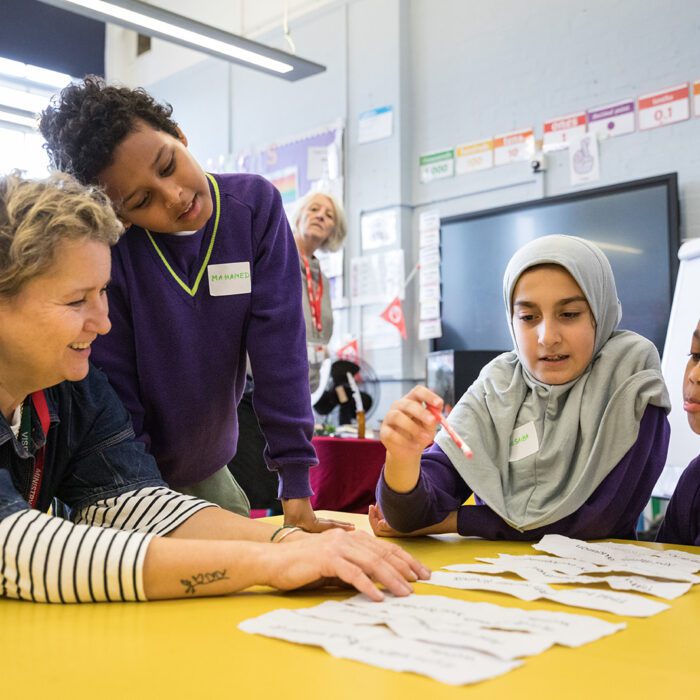
Led by our remarkable Writing Facilitator Michelle McMahon, the session saw teachers recognising and tackling their inner critics, generating ideas together through talk in a ‘writer’s room’. We shared inspirations – from the personal stories of family inspiration, to little moments of joy in the classroom – all on their terms, and in their own way.
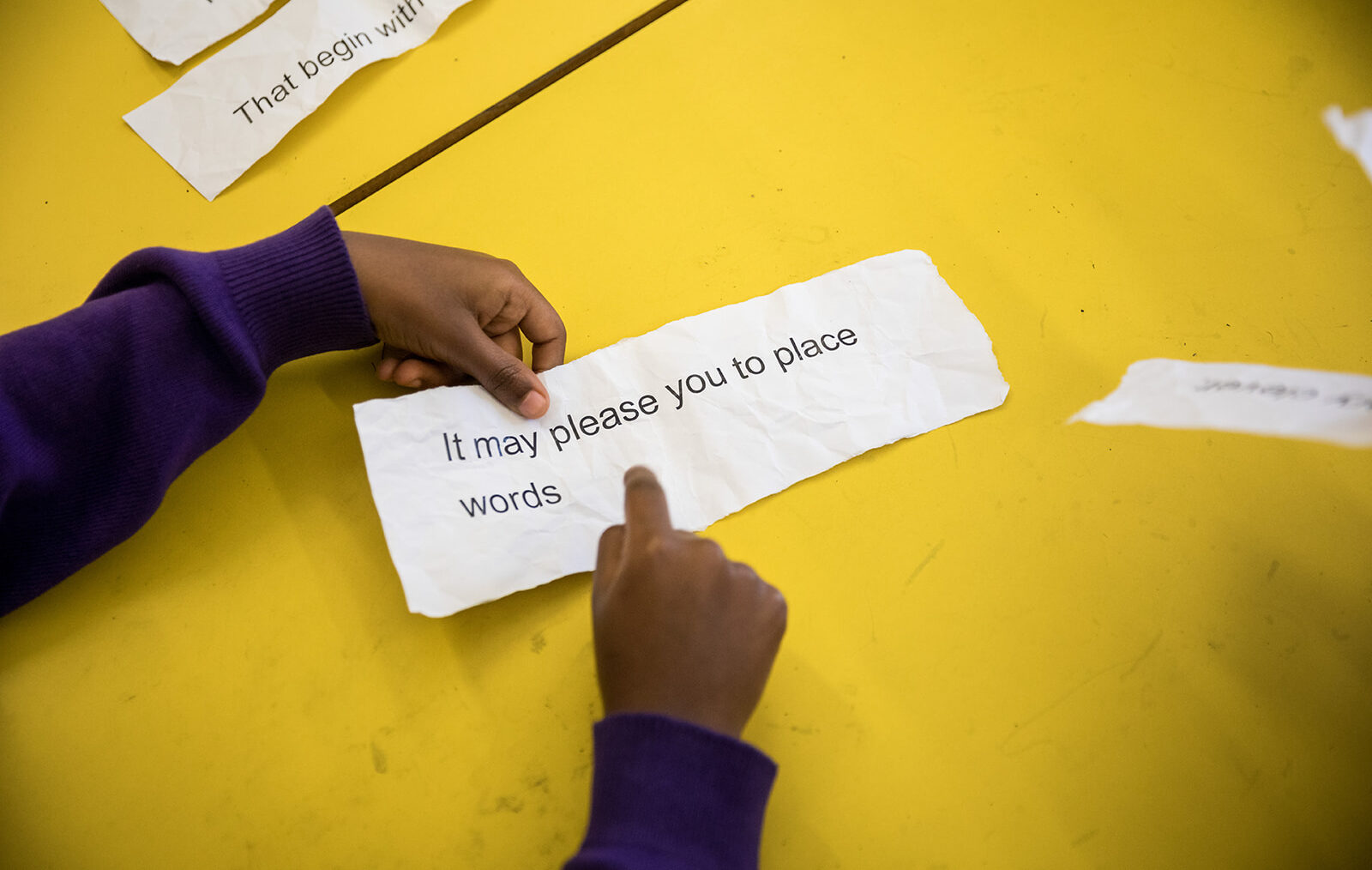
We bounced word games of impossible things to discover in our school bags, negotiating and combining ideas as a group to create unexpected combinations. We created lift off points for longer writing. We learnt how to microwave a ready meal from a hot air balloon.
We gave a prize for the most implausible reason why someone couldn’t share their work – the safety net of excuses we pre-empt sharing our ideas with… “It’s not very good, but…”, “I think I’ve done mine wrong…”. From our longer pieces of writing we encouraged sharing just one line, or even just one word, that captured the essence of the work – low stakes, non-threatening, accessible. And in fact, in combining these snapshots of work we created a remarkable group poem from everyone’s individual contributions.
Sometimes it’s just the simplest of ideas, the little steps to building self-belief, and making space for talk.
Find out about more about our work in east London schools